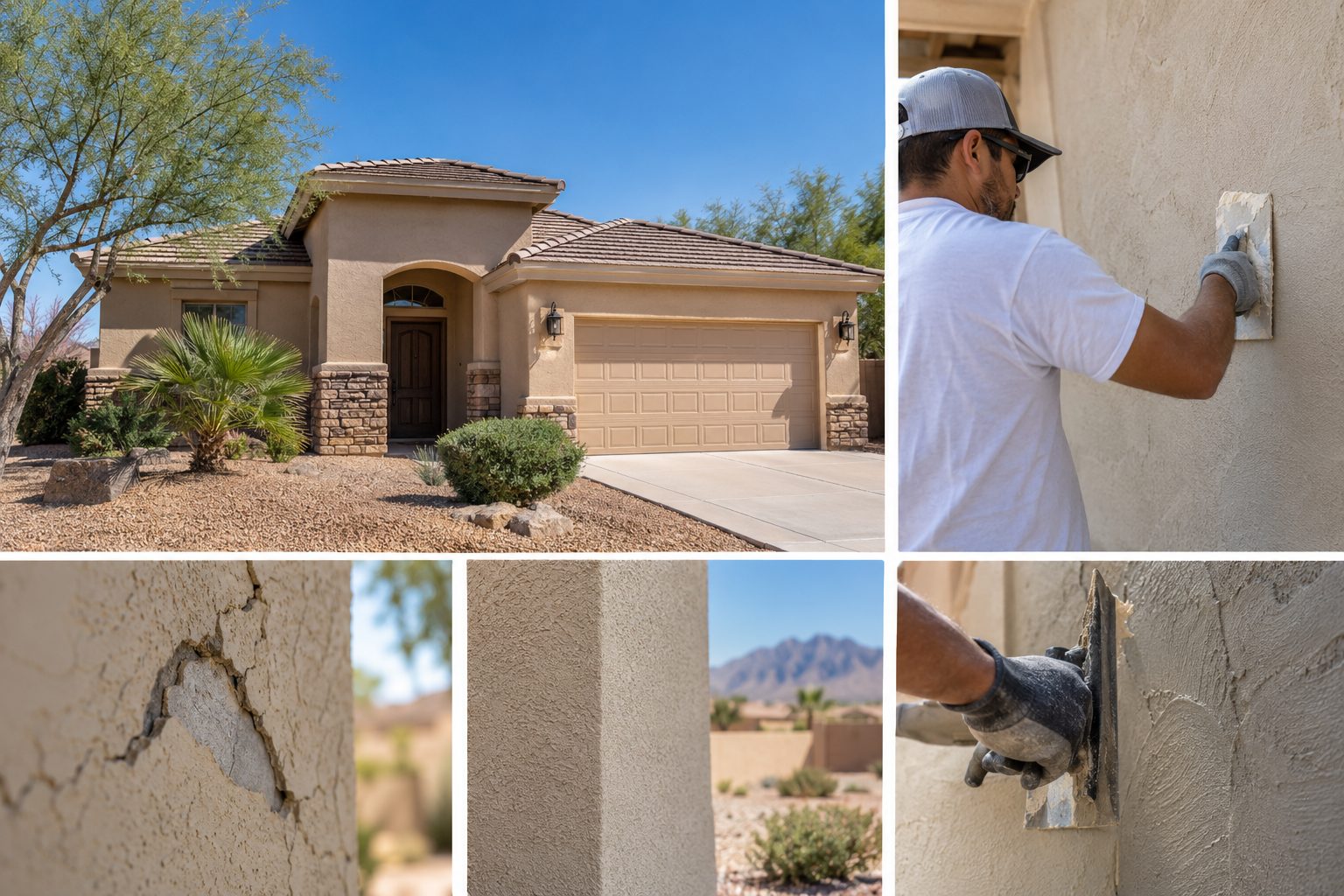
Traditional Cement Stucco Systems
Traditional Three-Coat Stucco
Plan a durable stucco assembly for the wall you are building or repairing. Get a Free Estimate
Traditional Cement Stucco Systems
Plan a durable stucco assembly for the wall you are building or repairing. Get a Free Estimate
Traditional three-coat stucco uses a layered cement plaster approach rather than relying on a single finish application. It is commonly described in terms of a scratch coat, brown coat, and finish coat, with the supporting wall preparation and reinforcement selected for the construction underneath. This method can be appropriate for new wall sections, additions, larger rebuilds, and repairs where the original assembly needs to be restored in depth.
The strength of a three-coat system comes from treating each stage as part of the complete wall. Proper preparation, thickness, cure time, transitions, and finish work all matter. Our work focuses on creating a solid repair or installation area and then finishing it to coordinate with the surrounding property as closely as the project allows.
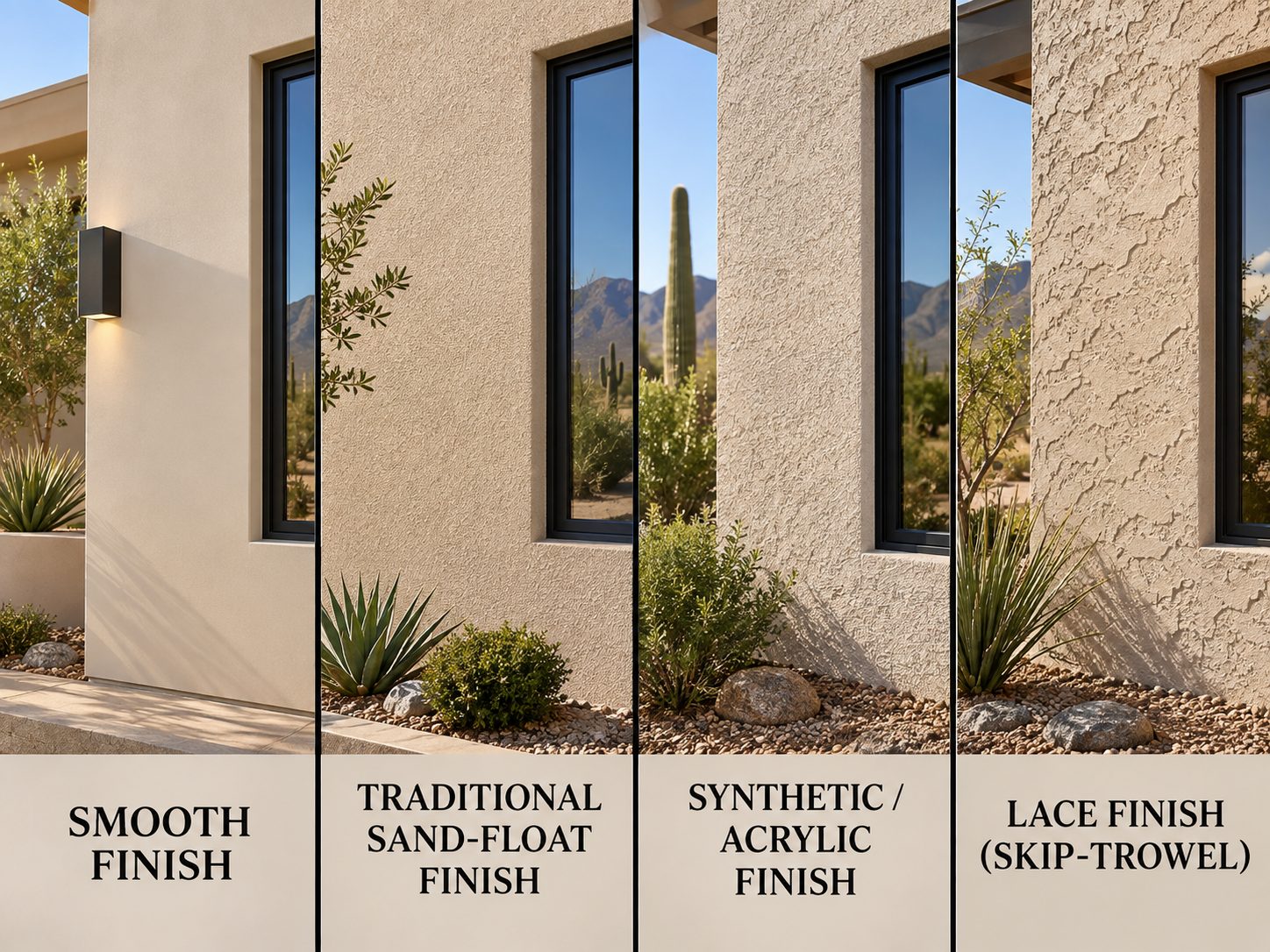
Three-coat stucco is not simply a thicker version of a cosmetic patch. It is a complete plaster assembly in which the underlying preparation and successive coats work together. Existing construction, substrate conditions, openings, transitions, and adjacent stucco all affect how the work is approached. On repair projects, matching the depth and behavior of the surrounding wall is particularly important. On additions or newly built sections, the new stucco also needs to meet the existing exterior in a way that avoids abrupt visual changes where practical.
The first plaster coat creates the initial cement layer over the prepared wall assembly. Its surface is left with the texture needed for the following coat to develop a strong mechanical bond.
The brown coat builds thickness, straightens the wall, and creates the base for the final texture. Care at this stage affects how flat, even, and consistent the finished wall appears.
The finish coat provides the visible texture and final exterior character. The selected finish can be coordinated with nearby stucco or used as part of a broader exterior update.
When damage extends through more than the surface finish, a deeper layered repair may be more appropriate than a thin patch. The repair is rebuilt to work with the surrounding stucco assembly.
Room additions, patio modifications, enclosed openings, and new wall sections often require stucco installation that integrates with existing exterior construction.
The meeting point between new and older stucco is often the most visible part of the project. We plan repair boundaries and texture work to make those transitions as natural as practical.
| Service | Estimated Cost | Average |
|---|---|---|
| Small full-depth wall repair | $900-$2,000 | About $1,400 |
| Medium new or rebuilt wall section | $2,000-$5,000 | About $3,400 |
| Large three-coat stucco installation | $5,000-$12,000+ | About $7,500 |
These planning ranges depend on wall construction, square footage, access, height, preparation, reinforcement, openings, finish texture, and how the new work ties into existing stucco.
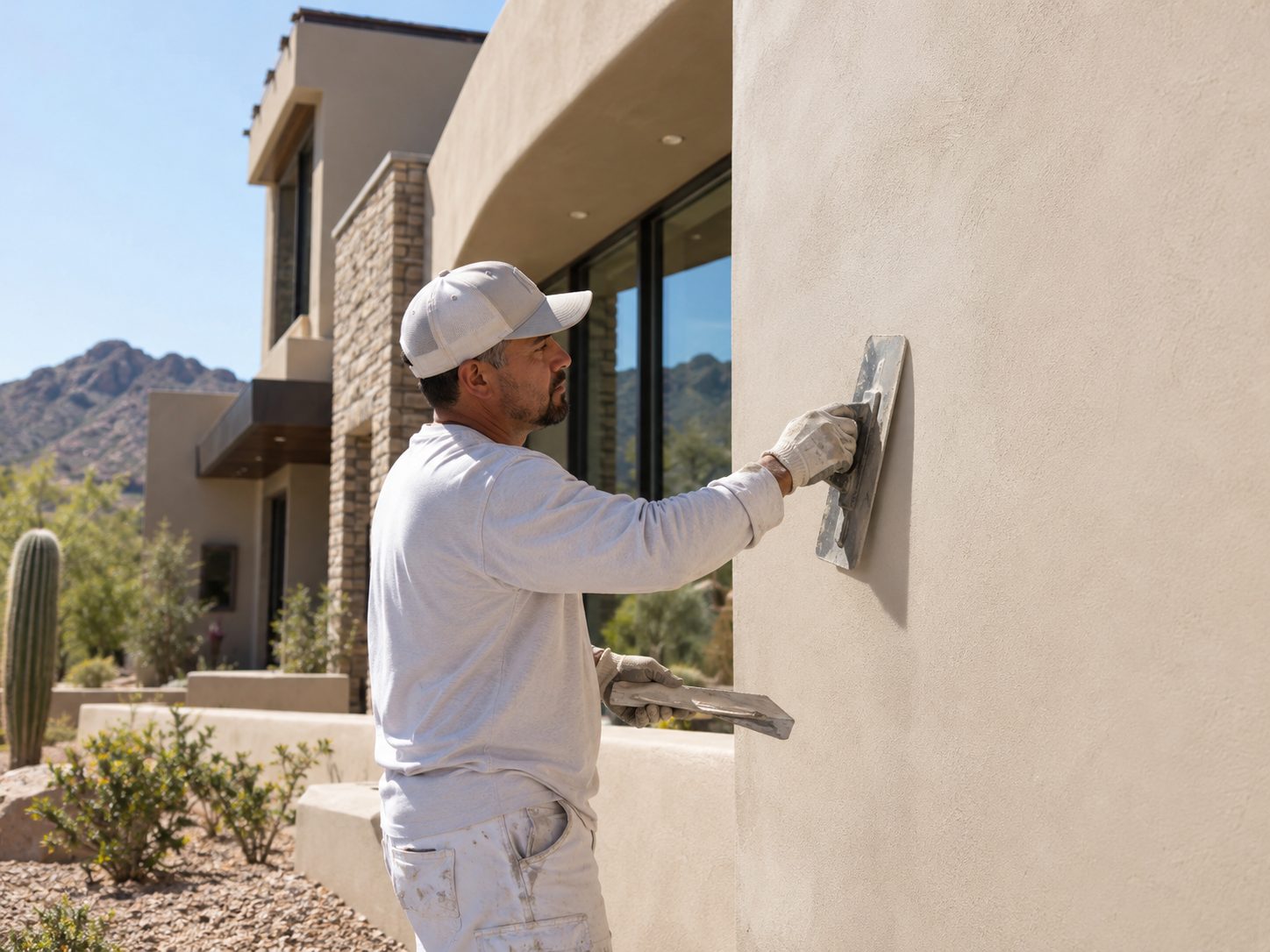
Traditional stucco depends on the complete assembly. We treat preparation, base coats, and finish work as connected parts of the project.
When a wall has deeper damage, we do not assume a surface-only patch will be sufficient.
Repairs and additions need deliberate transitions into adjacent stucco so the new section does not look like an afterthought.
The visible coat is selected and applied with the surrounding texture, wall exposure, and overall exterior appearance in mind.
For additions or deep repairs, tell us what type of wall work has already been completed.
Free — no obligations

We evaluate the work area, surrounding stucco, substrate, openings, and the depth of repair or installation required.
The wall is prepared for the plaster system, including the supporting materials appropriate to the project conditions.
Scratch and brown coats are applied in sequence to create the body and plane of the stucco wall.
The work proceeds with the timing needed between stages rather than rushing directly from base work to finish.
The visible finish is applied to coordinate with the planned look of the wall and nearby surfaces.