Finish Stucco Repairs Cleanly
Stucco Color Matching and Painting
Make the completed repair feel more natural on the wall. Get a Free Estimate
Finish Stucco Repairs Cleanly
Make the completed repair feel more natural on the wall. Get a Free Estimate
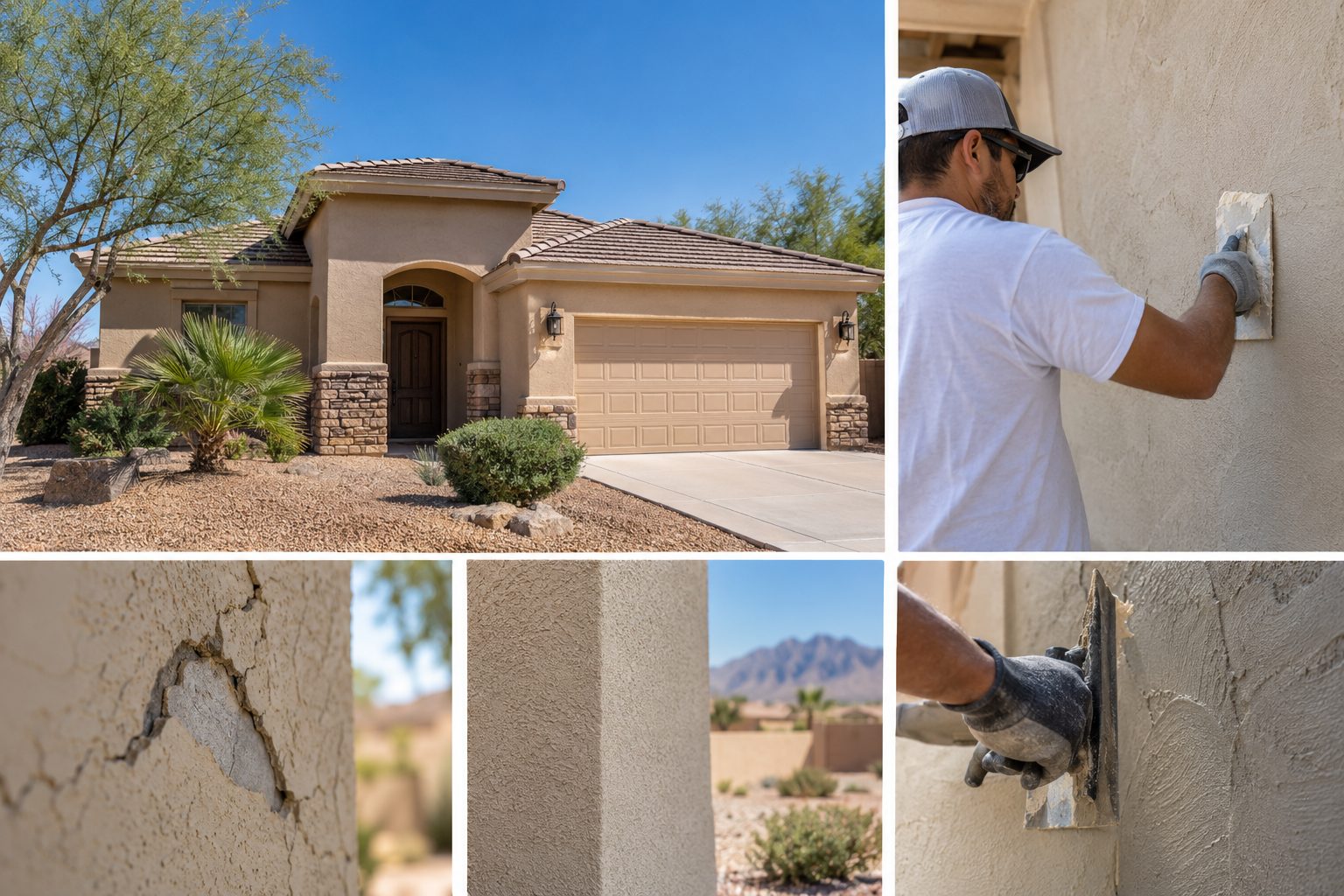
Even a carefully textured stucco patch can stand out when fresh material sits beside a wall that has spent years in Arizona sun. Exterior colors fade, collect dust, weather unevenly, and change after repeated painting. That is why color matching and painting should be considered as part of the overall repair rather than only after the patch is finished.
We evaluate the repaired area in relation to the surrounding wall and discuss whether a limited touch-up or a broader painted section is more likely to look consistent. Exact invisible matching cannot be promised because aged surfaces vary, but careful color selection and sensible stopping points can make the finished repair much less noticeable.
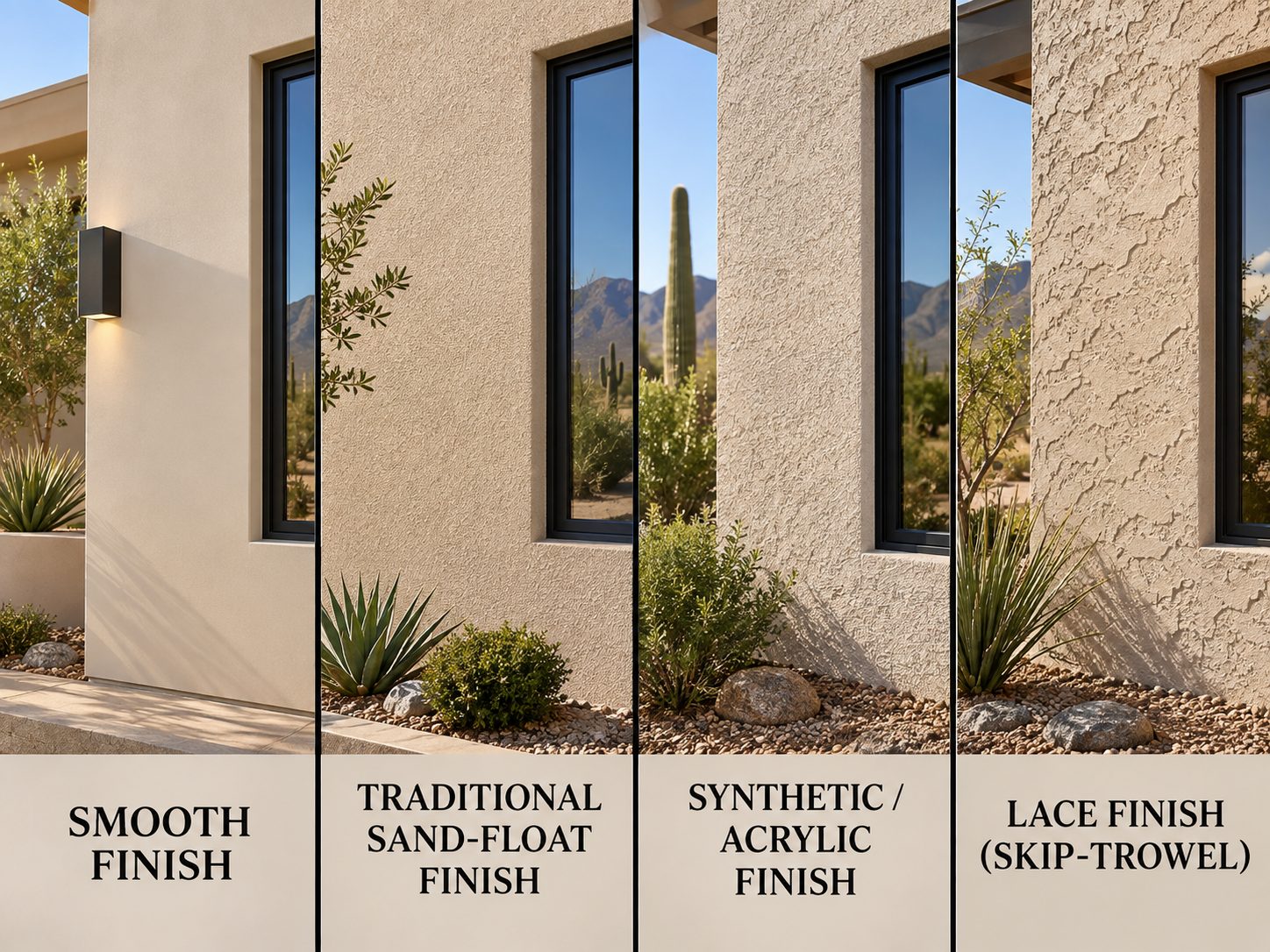
Mesa sunlight is unforgiving when it comes to exterior color differences. A sample that looks close in shade can appear different once it covers a larger patch or sits next to a weathered wall in direct afternoon light. Texture also changes how a color reads because raised areas and recessed areas create different shadows. For these reasons, we look at both the coating and the physical surface. When a wall has substantial fading or several old repairs, painting a full architectural section can sometimes create a cleaner result than repeatedly spot-matching individual patches.
We select a practical color direction for repaired stucco based on the existing wall. Weathering can make exact reproduction difficult, so the goal is a natural visual transition rather than an unrealistic promise of invisibility.
Small repairs may be suitable for localized coating when the surrounding paint is relatively consistent and there is a reasonable place to blend the new work.
When spot matching would leave a visible halo, painting to a corner or architectural break can create a cleaner stopping point.
Strong Arizona sun can fade certain elevations more than others. Broader painting may be worth considering when an otherwise good repair cannot visually match a heavily weathered wall.
If a wall contains several newer and older repairs, a unified coating can reduce the patchwork appearance once the underlying stucco is stable.
Paint does not correct a poor texture match by itself. We consider texture and color together so each stage supports the final appearance.
| Service | Estimated Cost | Average |
|---|---|---|
| Small repair-area paint blend | $250-$600 | About $400 |
| Single wall or elevation painting | $700-$1,800 | About $1,100 |
| Multiple exterior stucco walls | $1,800-$5,000+ | About $3,000 |
These planning ranges depend on wall size, access, preparation, coating condition, number of colors, repair area, and whether broader painting is needed to achieve a consistent appearance.
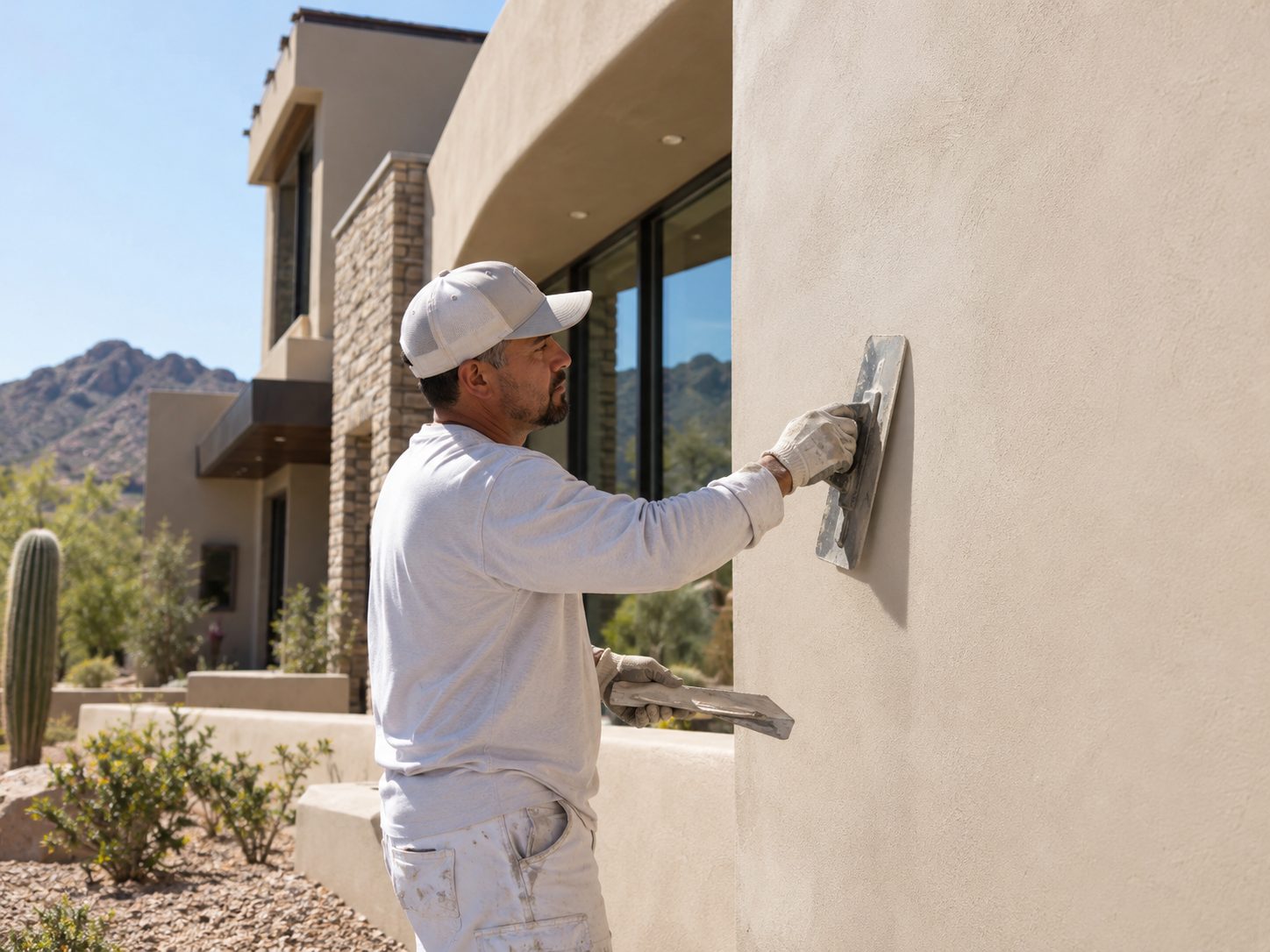
New paint and aged paint do not always behave the same way. We explain when a spot blend may remain visible.
Corners and architectural breaks can help avoid obvious color changes in the middle of a wall.
A good color match cannot compensate for the wrong stucco texture, so the repair and coating stages are considered together.
Direct sun can reveal differences that are harder to see in shade. We evaluate the wall with local exposure conditions in mind.
If you know the existing paint color, share it with us, but we can still evaluate the wall without it.
Free — no obligations
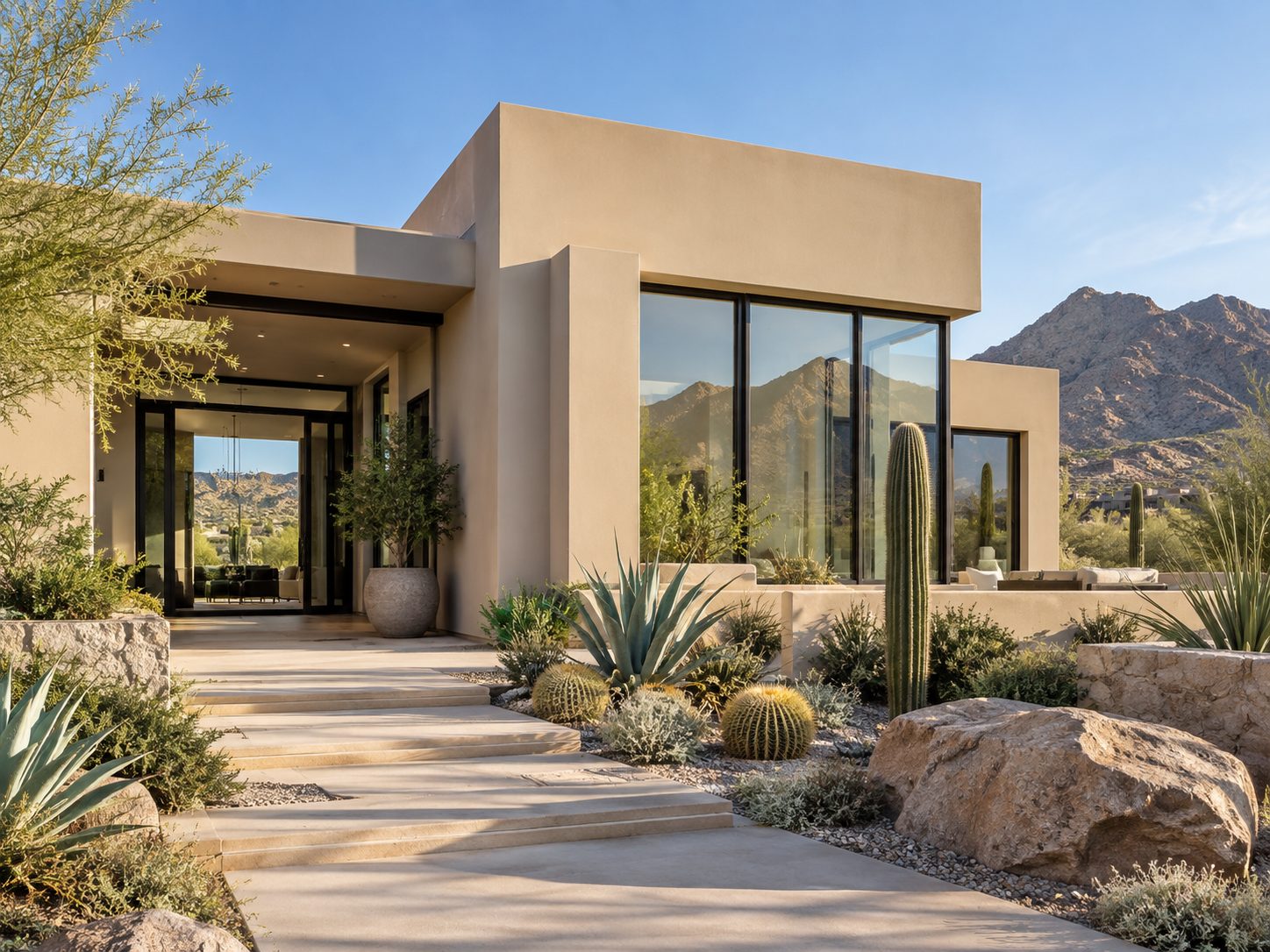
We compare the new stucco with the surrounding surface, including texture, fading, existing paint, and natural wall breaks.
We determine whether a spot blend, full wall, or larger defined section is the more practical approach.
The stucco and surrounding coating are prepared as required for the planned finish.
The coating is applied with attention to coverage and consistency across the intended project area.
We look at how the repaired and painted section relates to adjacent walls and finish boundaries.